I grew up on the banks of Dniepr, the greatest river of Ukraine, and the question “Where does my water come from?” was one of the most immaterial issues of my youth.
As I fast forward a few decades and move across an ocean, I find myself living in Southern California and sharing this beautiful desert with some 19 million people. One thing unites our massive group – we must have clean and safe water readily available to us at any time. However, there are no fresh water resources anywhere in S. California capable of sustaining this major population center. Therefore, one of the most important conversations of our life must focus on a glass of water and start with the question: “Where does it come from today and will it be here tomorrow?”
I’ve lived in the Greater LA area for one third of a century and have heard stories about someone named William Mulholland and his quest to bring water and life to these dry lands. Also, my house is located near Mulholland Hwy in Calabasas and I am intimately familiar with the hefty water bill, which arrives in my mail box every other month.
Needless to say, I jumped at the opportunity to spend an extended weekend with the folks from the Las Virgenes Municipal Water District and travel the length of our water lifeline. We started our journey on a chartered bus at the LVMWD headquarters in Calabasas and continued to the water treatment facility in La Verne, then to a huge reservoir near Hemet, pumping station at Lake Havasu, and the highlight of the trip – a tour of the power plant and the lower observation deck of the legendary Hoover Dam.
It took us three days to follow the route taken by the tamed waters of Colorado River as they bring life to Southern California. During this trip we’ve seen and learned a great deal about water, the tremendous amount of effort it takes to bring it to our homes and the people who make it possible. I will not even attempt to repeat everything that was covered during the trip. Let me just highlight a few items that really surprised me about how we use the water:
- The water we get from LVMWD doesn’t originate in Colorado River. Rather, it comes from Lake Oroville in Northern California and travels through Sacramento Delta via the California Aqueduct created by the State Water Project. In that sense, we are not using the water, which was brought to LA by Mr. Mulholland, even though the street named after him crosses Calabasas.
- The Climate Change is starting to have significant effect on Sacramento Delta and, therefore, on the water we receive from N. California. Eventually, it may completely shut down California Aqueduct in its present form and choke off our water supply. Therefore, it is critical that we take corrective (albeit expensive) action right now in order to build new route for the Aqueduct and avoid the looming disaster.
- An average household serviced by LVMWD does not drink the water it receives and uses 70% of it to irrigate the lawns! Now, I love the greenery as much as the next person, but don’t you think that our backyards should match the native desert environment rather than imitate a luscious tropical jungle?
- We have pretty high water bills, but we are not paying that much for the water itself. Rather, we are paying for the delivery of this water over hundreds of miles and the technical miracles required to bring it to us.
- Even though it seems that our water is expensive, the average price per gallon charged by LVMWD comes up to just 0.033 cents. Compare that to the price of some “designer” bottled water like Fiji, which commands the price of about $6 per gallon.
We spent two nights in a place called Gene Camp, which in 1930‘s used to be a campsite for the Metropolitan Water District workers building the Parker Dam and the Copper Basin Reservoir. A number of the MWD employees still live in Gene Camp on the permanent basis and it is used to give shelter to the District guests. Our lodging consisted of very simple but clean and comfortable rooms. We had really enjoyed the home-cooked meals created for us by the tireless wives and daughters of the District employees. Huge “thank you” to these wonderful women for their delicious effort and for sharing their recipes with us!
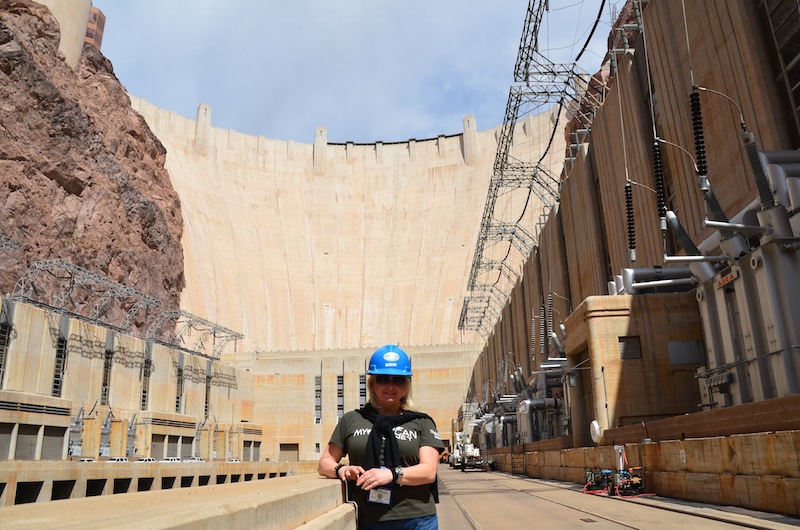
Our trip culminated deep in the bowels of Hoover Dam. The group donned blue hard hats, rode two huge elevators a few hundred feet to the water level and walked through long tunnels to observe the work of a power plant, which supplies electricity to Nevada, Arizona and California. After the events of 9/11 only the technical personnel is authorized to visit this part of the Dam and we felt privileged to be able walk freely in this amazing place and take photo’s from the very bottom of this monumental structure.
In conclusion, I would like to thank Director Glen Peterson of the Metropolitan Water District of S. California for sponsoring this trip, for taking the time to personally accompany the group and to answer our endless questions. I also want to thank Deborah Peters, Jeff Reinhardt and Bernie Stillions of the District for making this trip the most pleasant, fun and memorable event.
Click here to see the photo album from the trip.
Keep on traveling,
Lenka info@lenkatraveler.com