Part 3 of 6: Lhasa Notes: 29 – 31 June 2011
One of the first things that immediately strikes a visitor from the “mainland” China to Tibet is the bright blue sky with a few picturesque white clouds. Let’s be honest, most of China is not known for its blue sky! Then you notice the extremely dry air, lightheadedness, headache… and no wonder – you just landed in the highest major airport on the planet at the altitude of more than 3600 meters above the sea level.
You get into a tour bus and ride for an hour along dry river beds, sparse vegetation, a few sleeping yaks, and the five-colored prayer flags hanging from every roof and hilltop. Along the road you may see a few men throwing themselves onto the pavement, then getting up only to end up in the dirt a minute later. “They are praying”, explains the tour guide, “as they go to a Buddhist monastery. Some pilgrimages may take years to complete”.
Eventually, you get to Lhasa and realize that it looks like a normal provincial Chinese city. Its streets are wide and long, clean and orderly. There are massive construction projects rising up everywhere, busy shops, lots of taxis, but the government buildings are heavily guarded by the uniformed soldiers in full battle gear. The closer you get to “old” city (the area near the Dalai Lama’s palace) the more soldiers and police are positioned on every corner. The soldiers are standing with their backs to each other, staring from underneath their steel helmets. One man in every unit is holding a menacing-looking shotgun at the ready. They are waiting for something to happen – let’s hope that this “something” will not occur during the next 3 days.
What do you do in Lhasa? First and foremost, you try to survive the high altitude sickness. You suffer from persistent headaches, insomnia, dizziness, nose bleeding, tiredness, high blood pressure, and so on and so forth. Seemingly there is no solution and there is no way out, until you get used to the high altitude or move back to the sea level. While you suffer from all of these conditions, you must push yourself to the new heights. After all, you didn’t go through all this trouble of getting here to be laying down in a hotel room and sucking on the oxygen bottle, did you?
You start the morning by visiting a Tibetan family at their home and drinking their traditional tea heavily diluted with yak butter. The nauseating smell of this concoction stays with you for the rest of your trip to Tibet, simply because it is everywhere – every place of prayer is burning candles made from the yak butter and the locals consume the butter in every imaginable manner.
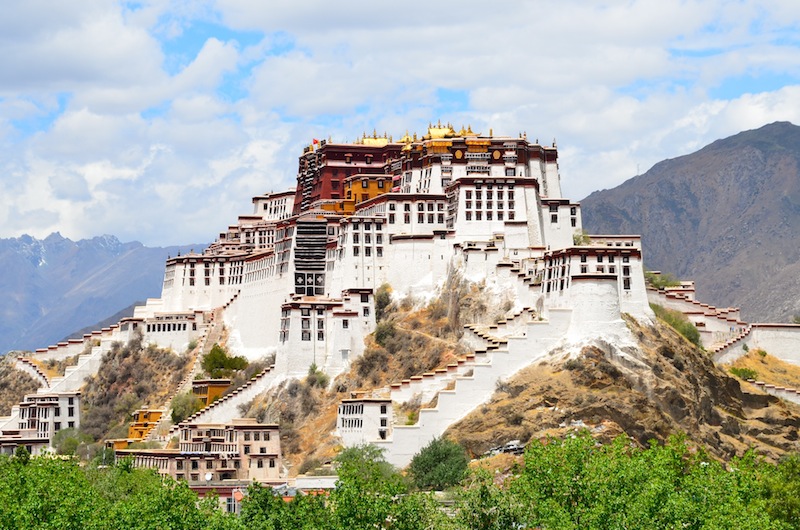
Now it is time for the main event – climbing 365 stairs to enter Potala Palace, the massive structure rising more than 200 meters above the already mountain-high streets of Lhasa. Potala Palace is the traditional residence of Dalai Lama’s, who used to live here since 1600‘s. It has almost 1000 rooms filled with holy scrolls, every imaginable artifacts and, yes, lots and lots of burning yak butter candles. However, the authorities give your group only one hour to rush through the entire palace – someone is actually timing the excursion! No worries – our group had made it with the whole 2 minutes to spare!
Now it is time for more monasteries, old town markets, yak meat restaurants, and… the world famous mastiff breeding farm!
Keep on traveling,
Lenka info@lenkatraveler.com